
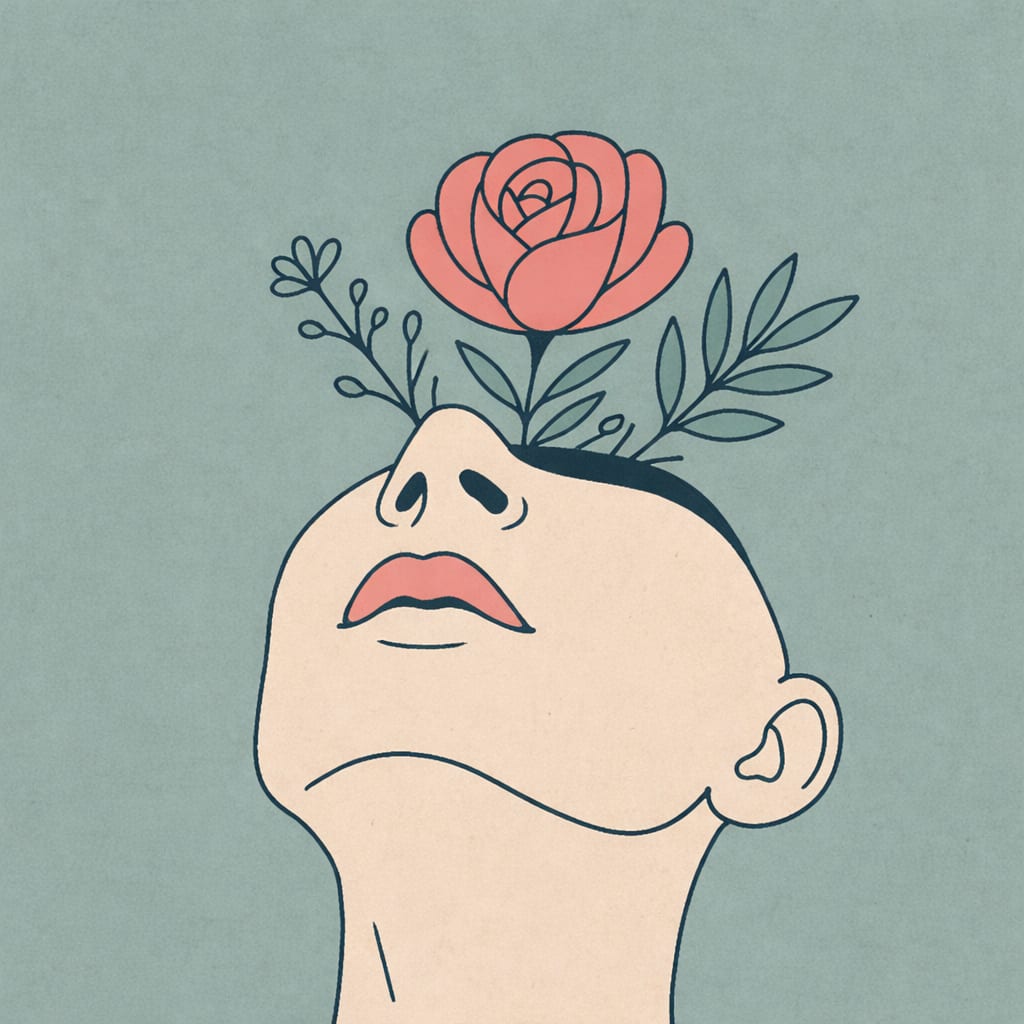
I Wanted to Build a SaaS. Then Life Chose the Problem for Me
I used to dream about being a digital nomad: working from anywhere, living lightly, building something of my own. But I also wanted the opposite: to be close to my family and friends, to own a place that felt like mine, and to have an income predictable enough that I could finally unclench. This is the story of how those two wants collided, and how Whisper Vault came out of it.
That pull in two directions didn’t come from nowhere. I was adopted as a baby, and I’m deeply grateful for it. I have the best family in the world, and I wouldn’t trade the life they gave me for anything. But I’ve also learned that the body can remember what the mind can’t. Even with a good childhood, I carried a quiet, background sense that things could change without warning. I didn’t call it anxiety at the time. I just assumed this was normal: a little tense, a little braced, always preparing.
And my body kept that pattern. I could be doing “fine” and still feel on edge, like some part of me was scanning the horizon for what could go wrong.
I think that’s why I grew into two versions of myself at once: the one who wanted freedom, travel, reinvention, and the one who needed safety, predictability, and control, because safety never felt guaranteed.
Looking back, that tension was there long before I had words for it. Part of me believed that if I could just build the right thing and solve the right problem, the world would finally make sense. Another part never quite felt safe, as if security could disappear the moment I stopped guarding it.
The dream was real. The idea wasn’t.
For a long time, I thought becoming a SaaS founder would give me both: the freedom to build something of my own, and the safety I was always looking for. I wanted to build something real, something that could carry me, something that didn’t depend on luck. The problem was: I never knew what I wanted to build.
I had ideas. I built a lot of side projects. But most of them gathered dust, not because I couldn’t build, but because none of them had a reason strong enough to survive the hard days. They were interesting, but they weren’t necessary. And if you’re building alone, “interesting” rarely carries you through the parts where you’re tired, scared, or unsure it’s working.
When life chooses the problem for you
During a rough patch, my inner world got loud. Anxiety has a way of doing that, making everything feel urgent and unclear at the same time. I tried the usual things: I tried to think my way out of it, to analyze it, to understand why I felt like shit and hope that naming it would make my body quiet. It didn’t. I tried to stay busy and disciplined, hoping momentum would carry me through. And I tried to journal in the way people say you’re supposed to, like if I just did it “right,” I’d finally feel better.
But what I needed wasn’t logic. I needed a place that felt like mine: a space I could open the moment anxiety hit, even if it was dark, even if I wasn’t near a notebook. Something private and familiar, where I could customize the pages, add stickers, and make it comforting instead of clinical. Because you don’t get to schedule anxiety. You never know when it’s going to show up. I needed something that helped me step out of the same familiar loops. They were comforting in a strange way because they were known, but they weren’t serving how I wanted to feel anymore.
So instead of trying to find and write in the perfect journal, I started building that space.
At first, it wasn’t a startup idea, just something I wanted to exist. A quiet place I could return to when my thoughts were too tangled. But over time, I realized a blank page wasn’t always enough. When my mind was chaotic, I didn’t need more room to spiral. I needed guidance that could carry some of the processing for me.
So I began shaping it into something more structured: not just journaling, but guided reflection that helped me see patterns, and a way to track small proof over time that I was changing. Evidence I could come back to in the next hard season, when my brain would try to tell me nothing had shifted.
I kept using it. That’s how I knew it mattered. And once I realized I was still returning to it long after the initial burst of motivation faded, I understood it had potential. Not because it was perfect, but because it was real. It was meeting me where I actually was, in the moments I needed it most.
The layoff, and the moment everything could have stopped
A few months later, I got laid off.
On paper, it looked like a fork in the road: find another 9 to 5, rebuild stability, move on. But the truth is, I was already hitting a wall. At the same time as I had work responsibilities and a life to maintain, I also wanted to change. Really change. And change, at least the kind that actually sticks, comes with a lot of uncomfortable growth. It brings things to the surface. It shakes your routines. It makes your nervous system loud.
I didn’t want to stay the same. But I also didn’t want my attempt at personal growth to show up as me performing badly at work: distracted, exhausted, scattered, or constantly trying to hold it together. The more I tried to do both at once, the clearer it became that the way I was living wasn’t giving me the space I needed to become someone different.
And in the middle of all of that, I had also built something I couldn’t ignore. For once, I wasn’t chasing an idea because it sounded impressive. I’d made something I actually needed, kept using, and could see growing into something real.
So I made a choice. I packed my things and moved to Asia to build Whisper Vault full-time.
It wasn’t just about leaving a predictable paycheck. It was about giving myself room to change without constantly feeling like I was failing somewhere else. To stop splitting myself in half. To build a life that could actually hold the person I was trying to become.
I didn’t have responsibilities I needed to maintain back home, or something specific I was saving up for, which made the timing feel as clean as it was ever going to be. It felt like a rare opening, and if I wanted a different life, I had to choose it, even without guarantees.
I’m doing this as a solo founder, funding it myself, learning as I go. Some days it feels grounding. Some days it feels terrifying. But it feels purposeful in a way nothing else ever has.
What Whisper Vault is really for
Whisper Vault is my attempt to build the thing I wish existed: a quiet sanctuary for people who feel a lot, carry a lot, and are tired of getting stuck in patterns: inside themselves, in relationships, or in the unconscious stories and beliefs they’ve been living by, even when those stories keep them from stepping into who they actually want to be.
It’s built for the kind of self-understanding that doesn’t come from pushing harder, but from listening more honestly. For people whose memories might be fuzzy, but whose bodies remember.
Where this goes next
I don’t know where this path leads yet. But I know this: for the first time, I’m not trying to force a product idea into existence. I’m following a problem that found me, one I didn’t ask for, wouldn’t wish on anyone… but that gave the work a reason to exist.
Whisper Vault’s mission is to help people build a kinder relationship with themselves, so they can nurture the relationships around them from a steadier place.
When we tend to our inner world with honesty and care, we create ripples of calm in everything we touch.
Thanks for being here. Truly.